Most individuals picture first aid as a plaster and an endure smile. In method, the skills you construct in a first aid course go much deeper. You find out to read a scene rapidly, make decisions under anxiety, and perform straightforward, reliable activities that get time until expert assistance arrives. I have viewed reluctant individuals become tranquil organizers by the end of a solitary day, not due to the fact that they remembered every condition in a textbook, however due to the fact that they exercised a clear framework and a handful of lifesaving methods up until they really felt natural.
The worth turns up in ordinary locations. A coworker choking throughout a work lunch. A kid pulling a hot mug off a table. A biker taking a tough fall on wet sidewalk. First aid training transforms those moments from panic right into deliberate actions. Below is what a solid first aid and CPR course develops, why it matters, and how to determine which first aid courses fit your needs.
How a good course really transforms behavior
The initial change most students notification is not scientific in any way. It is way of thinking. First aid training begins with scene safety and security, personal security, and a framework for decision making that stands up when your heart is racing. You will certainly exercise a key study that comes to be force of habit: look for threat, check responsiveness, phone call for help, and take care of life threats in order. Instructors strengthen that you do not need a clinical degree to save a life. You require a plan you can keep in mind and the judgment to adhere to it.
Time and once again I have actually seen hesitant participants freeze throughout the first circumstance, then take fee later on in the day The original source when they understand that little, correct actions stack up. Clearing up a tongue from the respiratory tract. Moving someone into recuperation placement rather than propping them up. Asking an onlooker to call emergency solutions while you start chest compressions. The training changes uncertainty with a few core relocations and the confidence to make use of them.
Reading the scene and prioritizing
Long prior to bandages, you find out to scan. A reputable first aid course teaches you to secure yourself with gloves, a barrier for rescue breaths if your training course includes them, and basic hygiene to minimize infection danger. Then, you will certainly overcome a main assessment that triages what matters most.

- Check action and breathing, proper respiratory tract problems, and take care of severe bleeding quick. Whatever else can wait two or three minutes. Call or hand over the emergency situation telephone call early. The distinction in between calling at minute zero versus min 3 is not abstract, it influences survival and treatment choices. Use basic placing to help physiology. Apartment on the floor for thought shock, recuperation placement for a breathing but unconscious person, gentle immobilization for thought back injury.
This triage lens is the solitary most valuable ability to perform of your first aid course. It transforms an untidy case into a series you can manage.
CPR that works in the real world
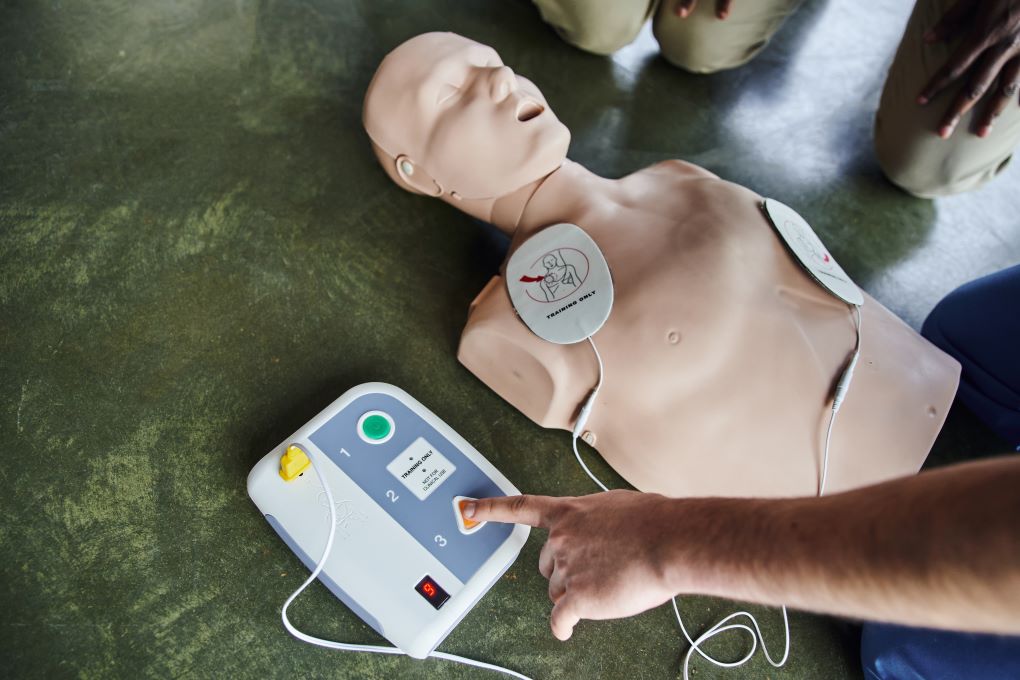
CPR is not strange. It is a hand-operated pump you run for the heart and lungs till a defibrillator or paramedics can bring back a regular rhythm. A trustworthy CPR course focuses on depth, rate, recoil, and marginal interruptions. You will certainly exercise on manikins till your hands locate the right area without believing. Expect comments on pace, typically 100 to 120 compressions per min, and depth, about one third of the upper body for kids and approximately 5 to 6 centimeters for adults. If your class consists of breaths, you will certainly learn exactly how to produce a seal and watch for chest surge without overinflating.
You will likewise educate with an AED, the automated external defibrillator found in flight terminals, malls, fitness centers, and many offices. The gadget talks you via pad positioning and rhythm evaluation. The greatest obstacle is not the modern technology, it is the reluctance to order the AED and utilize it. A few monitored runs in cpr training eliminate that barrier. Participants leave knowing that the device will not surprise unless it discovers a shockable rhythm, so they can not hurt somebody by following its prompts.
If you have a first aid certificate and it has actually been a while because you practiced, a cpr correspondence course can be very useful. Hands relax, compressions shallow, and delays sneak back in without regular training. Lots of specialists prepare a refresher course every one year, also if policies allow a longer interval.
Choking: from coughing to crisis
Choking is just one of those occasions where seconds matter and the steps are straightforward. First aid and cpr courses drill this up until it is reflex. Compare a partial obstruction, where the individual can cough or speak, and a full one, where they can not make a sound and might hold the throat.
If they can cough highly, motivate them to maintain coughing and display. Do not put their back mid coughing. If they can not cough, you relocate swiftly to back blows and stomach thrusts for adults and youngsters, with customized methods for infants and expecting individuals. The physical technicians issue. You intend back impacts between the shoulder blades and deliver abdominal drives internal and upwards from just over the navel. A couple of repetitions in course melt in the right-hand man placement and body position so you can deliver pressure without throwing on your own off balance.
After a successful clearance, the first aid advice is to look for medical evaluation, especially if there were repeated drives or the individual still really feels something lodged. Wounding the interior cells Homepage is possible, and delayed swelling can create restored breathing trouble. A well run program will share these side instances so you do not stop assistance too soon.
Severe bleeding and shock control
Modern first aid training shows straight stress as the initial line for severe bleeding. You will discover to push difficult and constant, to load gauze right into deep wounds if educated to do so, and to keep stress without frequently lifting the dressing to inspect. The lesson is counterintuitive for some learners that intend to peek. You will certainly exercise promptly layering dressings and protecting them so both hands are free.
Tourniquets show up in even more first aid courses today, particularly where industrial or farming injuries are possible. When a limb injury bleeds heavily and direct stress stops working or is not possible, an industrial tourniquet applied high and limited can be lifesaving. The skill is easy but take advantage of monitored technique. The error I see most is half procedures, a tourniquet applied loosely out of fear that it will harm. It will certainly injure. That discomfort tells you it is compressing the artery sufficient to issue. Good direction covers safe application times and the significance of keeping in mind when you applied it so responders can take care of reperfusion later.
Alongside blood loss control, you will resolve cpr refresher course gladstone shock. Shock is a circulation issue, not simply a sensation. The body can not move enough oxygen to the tissues. Signs include pale, great, or clammy skin, rapid pulse, and confusion. First aid reactions focus on regulating the cause, keeping the individual warm, existing them flat if endured, and calling for help early. You will certainly find out not to offer food or beverage when major injury or surgical treatment might be on the horizon.
Airway management and secure positioning
Many emergency situations rest on the boundary in between breathing and not breathing. Individuals collapse after seizures, head injuries, alcohol drunkenness, or diabetic episodes, and their tongue or vomit can obstruct the respiratory tract. A first aid course shows you just how to open and keep an airway with a head tilt and chin lift, or with a jaw drive if you suspect a spine injury. You will practice the recuperation setting that keeps the airway open and permits liquids to drain pipes safely. Rolling an individual efficiently without turning the neck is a skill, and it ends up being easier after a few directed repetitions.
When breathing is present however struggled, basic positioning aids. Propping a person with asthma in a comfortable seated stance, loosening up limiting garments, and assisting with their prescribed inhaler can resolve an assault. Conversely, someone fainting from a short decrease in high blood pressure gain from lying level with legs raised somewhat. These standard maneuvers, educated in first aid training, commonly settle the dilemma with no medication.
Strokes, cardiac arrest, and time-sensitive calls
Stroke acknowledgment is a classic example of why understanding matters as long as hands-on skill. Instructors cover typical indications like facial droop, arm weakness, and slurred speech. The activity is simple, call emergency solutions right away and note the moment signs began, because treatment alternatives typically depend on that timeline. In several areas, prehospital teams alert stroke facilities while en route, so your early call has actual downstream consequences.
For upper body discomfort and believed heart attack, you will learn to keep the person tranquility, seated, and still, assistance suggested medication such as nitroglycerin if appropriate, and organize fast transport. Pain killers advice differs by area and program degree, so a credible service provider makes clear local methods and when to avoid providing it, such as with severe blood loss, understood aspirin allergy, or current stomach blood loss. This is where a first aid pro teacher makes count on by discussing not only what to do but why.
Burns and scalds without myths
Ask individuals about burn treatment and you will hear a dozen folk solutions. A certified first aid course strips those away. Trendy the burn with cool running water, not ice, for about 20 mins ideally. Eliminate fashion jewelry and limited apparel early prior to swelling beginnings. Do not use lotions, butter, or tooth paste. Cover with a tidy, non-adhesive dressing. You will certainly discuss when to seek urgent treatment, specifically for deep burns, burns larger than the hand of the hand, or burns to the face, hands, feet, or groin.
Electrical and chemical burns include unique considerations. Electric injuries can create heart rhythm problems even when the skin looks fine. Chemical burns require extended watering and care to avoid polluting on your own. The training course will certainly walk through these differences and give you functional steps like brushing off dry chemicals before rinsing.
Fractures, strains, and secure movement
Musculoskeletal injuries respond well to relax handling. Paralyze the joint over and below a suspected fracture, pad splints to shield skin, and examine circulation, experience, and movement past the injury prior to and after you debilitate. If a limb looks pale or numb after splinting, you loosen up and adjust. For strains and stress, rest and cold packs assist in the initial day, with compression and altitude if tolerated. The subtlety below hinges on not overhandling. I have actually watched excited assistants create even more pain by repeatedly adjusting a limb. Your training will stress stablizing over inspection.
Spinal injuries should have special caution. If you presume a neck or back injury after a loss or collision, sustain the head in a neutral setting and avoid twisting. The best relocation is commonly to maintain the person still and allow trained responders use a collar and board, unless an immediate danger like fire compels a mindful drag to safety.
Allergic reactions and anaphylaxis
With allergies growing, several work environments and schools supply epinephrine auto-injectors. First aid and cpr courses now generally consist of acknowledgment and use. You will learn the signs of anaphylaxis, such as swelling of the lips or tongue, problem breathing, hives, throwing up, or a sense of foreshadowing ruin. The feedback is immediate: give epinephrine if available and permitted, call emergency solutions, and prepare to provide a second dose after several mins if signs linger and local guidance sustains it.
Small information make a distinction, such as injecting with apparel right into the outer upper leg, holding the device in place for the recommended time, and massaging is no more consistently recommended for several devices. An experienced trainer will certainly demonstrate with trainer pens and let you exercise the motion till it is smooth.
Diabetic problems, seizures, and fainting
Not every emergency situation requires innovative treatment. Low blood sugar, usual amongst people on insulin or particular dental drugs, can provide with sweating, shakiness, confusion, or odd actions. If the person is wide awake and can ingest, fast-acting sugar like glucose tablets, juice, or routine soda typically fixes symptoms within 10 to 15 mins, complied with by a snack with complicated carbohydrates. If the individual ends up being sleepy or can not ingest securely, you do not offer beverages or food. You call for aid and secure the airway.
For seizures, you will concentrate on safety and security as opposed to restraint. Clear the area, support the head, time the occasion, and roll right into healing position once the movements quit. Continuous seizure activity past a number of minutes or repeated seizures without recovery between them calls for immediate medical care. The lure for untrained spectators is to put something in the mouth. Training eliminates that misconception and demonstrates how to shield teeth and tongue without risking your fingers or the individual's airway.
Fainting typically settles promptly, but first aid training educates you to seek triggers and eliminate more serious reasons. Existing flat with legs elevated and fresh air commonly assists. Persistent confusion, upper body pain, serious frustration, or trauma from the fall relocates you toward medical evaluation.
Poisoning and ecological exposures
Many first aid courses consist of a component on poisonings. The guidance relies on the substance and course. You will discover not to generate throwing up unless routed by a poison control center and to bring the container or an image of it to responders. Inhaled direct exposures, such as carbon monoxide gas, require fresh air and instant medical aid. Skin direct exposures call for elimination of polluted apparel and detailed rinsing.
Environmental issues round out the skill set. Warm exhaustion appears in the summer with heavy sweating, frustration, and dizziness. Cooling, hydration if the individual is alert, and rest generally fix it. Warm stroke is a various monster, with hot skin, altered psychological standing, and possible collapse. Aggressive air conditioning and quick transport are essential. Cold injuries comply with the very same pattern, sluggish gentle rewarming for frostbite and medical evaluation when tissue is entailed. These subjects advise students that first aid is broader than remarkable rescues.
Communication that punctures noise
Technique issues, but words bring weight when crowds collect or family members panic. A good first aid course hangs around on interaction. You will certainly practice brief, clear instructions to onlookers, such as asking someone details to call emergency solutions and report back, or guiding another individual to fetch the AED near the health club entry. Specificity protects against diffusion of responsibility. You will certainly additionally discover to reassure the harmed individual with simple statements: you are below, aid is coming, you are maintaining them safe. Tone can reduce heart prices and lower the oxygen demand of stressed bodies.
Documentation, while not glamorous, has value. Keeping in mind times, observed signs, drugs offered, and adjustments in problem helps responders get the thread. Numerous first aid service providers consist of a small pocket card or application for quick note taking.

Choosing the right first aid course and provider
Not all first aid courses coincide, and that is ideal. Your workplace, family, and neighborhood shape what you need. A child care worker take advantage of pediatric-focused first aid and cpr, consisting of infant choking strategies and acknowledgment of childhood years ailments. A construction foreman may prioritize bleeding control, cracks, and electrical injuries. An office team typically selects a combined first aid and cpr course that satisfies regulative needs and prepares them for heart events.
Several cues indicate a quality company, whether a national organization or a specialized first aid pro:
- Time on skills, not simply slides. Search for training courses with generous hands-on method making use of manikins, AED trainers, and practical scenarios. Instructors with field experience and the ability to explain why, not simply what. Stories of genuine incidents aid learners hang on to principles. Up-to-date material straightened with recognized standards for CPR and first aid, and clear mention of regional methods where they differ. Options for cpr courses and cpr refresher course scheduling, so your group can keep skills fresh without significant disruption. Issuance of a first aid certificate that companies and regulatory authorities accept, with clearness on revival intervals.
If you are selecting for a team, request a brief telephone call. A seasoned organizer will certainly inquire about your environment, prior events, change routines, and any type of special risks, after that customize the agenda.
Practicing under stress: why scenarios stick
Books fade when adrenaline rises. That is why one of the most reliable first aid training counts on situations that approximate the real tension of an incident without going across right into theatrics. You could work through a simulated allergic reaction in a lunchroom, full with an obtained instructor auto-injector, or an organized loss on a stairs that requires head assistance and a tranquil contact us to emergency services. Debriefs afterward concentrate on choices and interaction as opposed to gotchas.
One participant from a hospitality team told me that 2 weeks after their training course, a choking visitor sagged in a dining chair. Anxiety spiked among servers up until one said the line she had practiced: I've got the back blows, you call triple no and get hold of the AED just in instance. The blockage gotten rid of after 3 strikes. The AED was not needed, yet the routine of handing over and preparing made the difference in between chaos and collaborated action. That is the payoff for role-play and repetition.
Limitations and when to tip back
First help is effective precisely because it stays within safe boundaries. You will certainly find out to recognize when to stop and wait. Do not move a person trapped in a vehicle unless fire or water endangers. Do not try to transfer a dislocated joint in the field unless your training and procedure permit it. Do not provide medicines past what the individual is suggested unless your course and jurisdiction clearly allow it.
There are grey locations, and great guideline prepares you for them. For instance, assisting with a person's very own bronchial asthma inhaler is generally supported, while giving them medication from a workplace kit might not be. Providing epinephrine from a public-access set is allowed lots of areas, with ideal coverage, but not everywhere. Your instructor should spell out local guidelines, and you must follow them. Confidence does not mean improvisating beyond your scope.
Aftercare and psychological health
People rarely discuss the hours after an incident. Once the ambulance doors close, the scene looks quiet, however those that assisted typically really feel unstable, guilty, or wired. A detailed first aid and cpr course points out psychological first aid for both the individual you helped and for you. Take a minute to debrief with your team, list what happened, and take into consideration a brief check-in phone call with a supervisor or counselor if the event was extreme. Tiny rituals, like cleaning your hands and resetting the first aid set, aid you shift out of crisis mode.
Following up issues for the individual you aided too. If it is a colleague or family member, a simple message the following day can close the loop and offer you exact information to improve your psychological model of what worked.
Keeping skills alive after the card
A first aid certificate notes a minute. Abilities live or discolor based upon practice. Establish easy routines. Locate AEDs in position you constant: fitness center, office, community center. Revitalize your memory quarterly with a 5 minute drill on compressions utilizing a cushion to rehearse hand positioning and rhythm. Skim your course booklet after daylight conserving time modifications. If you handle a team, rotate tiny situation refreshers right into conferences. A mock telephone call, a 2 minute choking drill, or a quick testimonial of hemorrhage control maintains understanding near the surface.
Many companies use brief cpr courses or modular refreshers that match a lunch break. Make use of those, particularly if your function places you touching the public. Skills sharpen promptly with even brief, focused practice.
The self-confidence to do the next right thing
The heart of first aid is not heroics. It is the ability to do the following ideal thing and after that the following, with tranquil hands and clear words. A well developed first aid course instructs that with a handful of important skills: scene assessment, airway and breathing assistance, CPR with AED usage, bleeding control, risk-free positioning, and recognition of time-critical problems. It pairs those with judgment, communication, and a respect for limits.
The results rarely make headings. They show up in regular stories. A grandparent that recognizes just how to cool a burn and when to seek help. An instructor that catches the very early indicators of anaphylaxis before it spirals. A teammate that starts compressions without waiting for consent. If you have been considering it, pick a provider, routine the course, and bring a pal. When the minute gets here, you will certainly be ready.